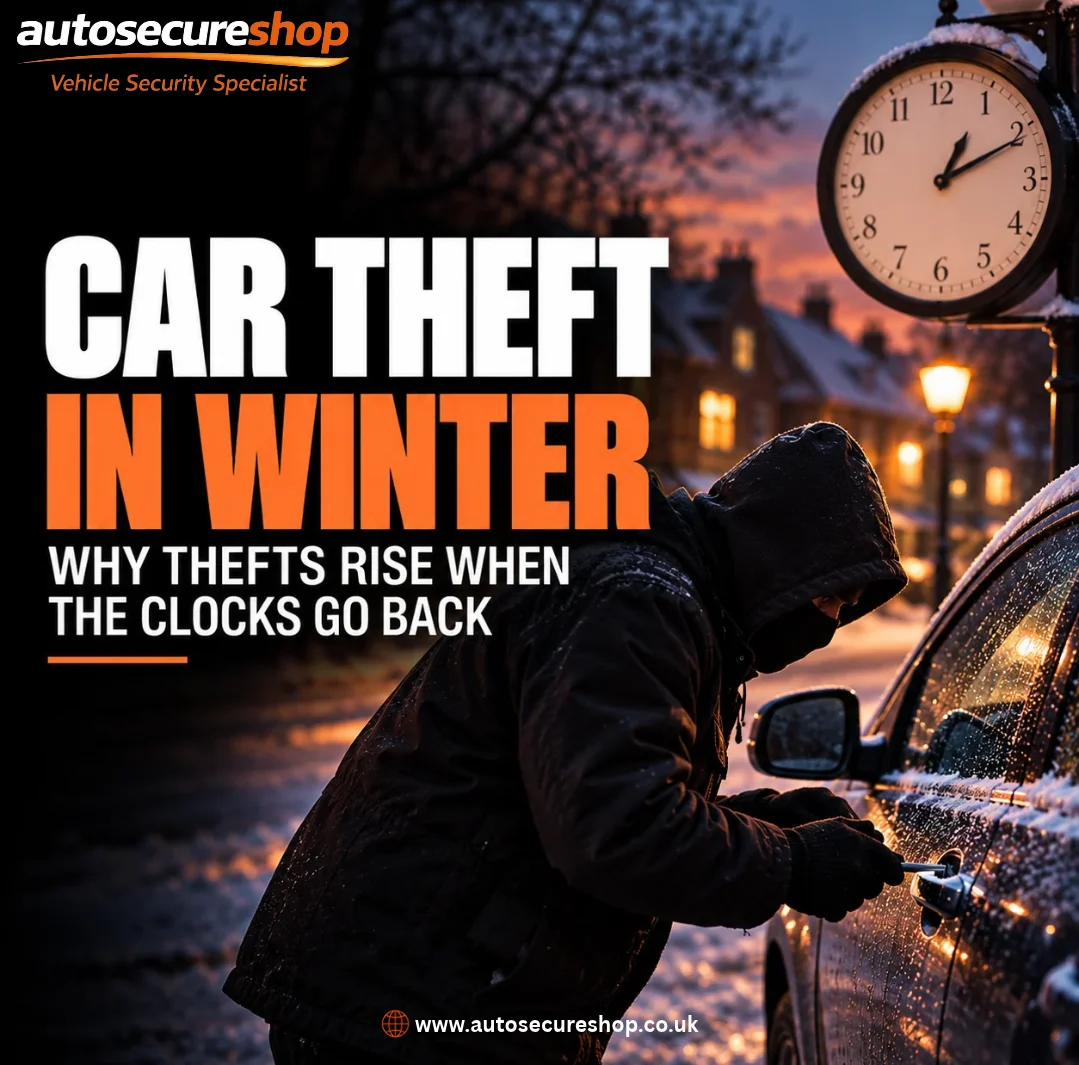
Car theft in winter rises for a plain reason: thieves get more darkness to work in, and car owners give them more chances. The clocks went back at 2am on Sunday 25 October 2026, and from now until late March most cars will spend the whole evening parked in the dark while their owners sit indoors with the curtains shut. That suits anyone who wants to steal a car or empty one.
The national trend is moving the right way. The Office for National Statistics reported on 22 October 2026 that police-recorded vehicle offences in England and Wales fell 7%, to 312,231, in the year to June 2026. That is still more than 850 offences a day, and the seasonal pattern hasn’t gone anywhere.
Monthly figures from individual forces show the pattern more clearly than national annual totals. West Midlands Police released its monthly counts for theft or unauthorised taking of a motor vehicle under Freedom of Information. In 2022, October (1,397) and November (1,389) were its two busiest months, while February (1,043) was the quietest. In 2023, October was again the highest month up to the point the request was answered, at 1,377.
That is one force over two years, so treat it as an illustration rather than a national rule. It does match what forces say every autumn, when dark nights campaigns go out almost as reliably as the clocks change.
A thief at the end of a driveway at 6pm in December is standing in full darkness. In June, the same spot is in daylight, with neighbours out walking dogs and washing cars. Relay theft, where one device picks up a keyless fob’s signal from inside the house and passes it to the car, takes very little time. The thief only needs to avoid being seen, and long evenings make that easier.
Modern cars are hard to steal without the key or its signal, so thieves go after the key. South Yorkshire Police has said that “two-in-one” burglaries, where someone breaks into a home purely to take car keys, have historically risen by almost 90% between the autumn clock change and March. A key bowl in sight of the front door does the thief’s research for them.
Cold mornings bring a different risk. Leaving the engine running while the windscreen clears hands the car to anyone walking past. On a public road it is also an offence under regulations 98 and 107 of the Road Vehicles (Construction and Use) Regulations 1986, which rule 123 of the Highway Code reflects. On a private drive that offence doesn’t apply, but the car is just as easy to drive away. Many policies exclude theft where keys were left in or on an unattended vehicle, so read your wording before relying on a claim.
The risk doesn’t arrive all at once. Halloween and Bonfire Night fill streets in the evening and leave cars parked in unfamiliar places. Late November and December bring shopping car parks that are dark before many people finish work. January brings the hardest frosts and the temptation to leave the engine idling on the drive. Each stretch suits a slightly different kind of thief.
Not every winter crime involves the car leaving. Theft from vehicles also tends to climb before Christmas, and Devon and Cornwall Police has said the opportunity for it traditionally rises over the festive period. Presents on a back seat are the obvious draw. Less obvious is the habit of filling the boot, locking up and walking back into the shops. Anyone watching the car park now knows which boot is worth opening.
The police advice is simple. Take shopping home between trips where you can, keep anything left behind completely out of sight, and check the car has actually locked rather than trusting the fob.
Relay theft usually takes two people and two devices. One stands near the house, often by the front door or a window, to pick up the signal from a keyless fob inside. The second waits by the car and passes that signal on, so the car unlocks and starts as if the key were right beside it. Police forces warn that it is quick, quiet and often happens overnight.
Because the attack depends on the fob broadcasting, cutting the signal at source is the most direct defence. Distance from doors and windows helps a little. A tested signal-blocking pouch or box helps far more.
Thatcham Research introduced the S5 and S7 tracking categories in January 2019, replacing the older Category 5, 6 and 7 system. Both cover monitored stolen vehicle tracking. The main difference is that S5 adds automatic driver recognition, which identifies an authorised driver and flags movement when that driver isn’t present.
Insurers set their own requirements, often linked to the value of the vehicle. Ask your insurer which category it needs, if any, before choosing a system.
Car batteries lose capacity in the cold, and winter driving often means short trips with the heater, lights and wipers running. Any device drawing power while the car is parked, such as a dash cam in parking mode, adds to that load.
Installation makes the difference. A properly fitted hardwire kit with a low-voltage cut-off switches the camera off before the battery drops too far to start the engine. Trackers draw very little power but still need correct wiring so they stay powered and out of sight.
Call 999 if the theft is happening now. Otherwise, report it to the police straight away to get a crime reference number, then contact your insurer. GOV.UK guidance says the police will tell DVLA about the theft and whether the vehicle is found. If a tracker is fitted, contact its monitoring service as well.
If your insurer pays out, you must tell DVLA the vehicle has been sold to the insurance company. If you want to keep a personalised registration, get it back before you tell DVLA.
Good security works in layers. One device slows a thief down; several together make the car more trouble than it is worth.
A steering wheel lock won’t stop a determined thief, but it costs them time and noise and can be seen from the street. Police crime prevention teams regularly suggest one alongside a signal-blocking pouch.
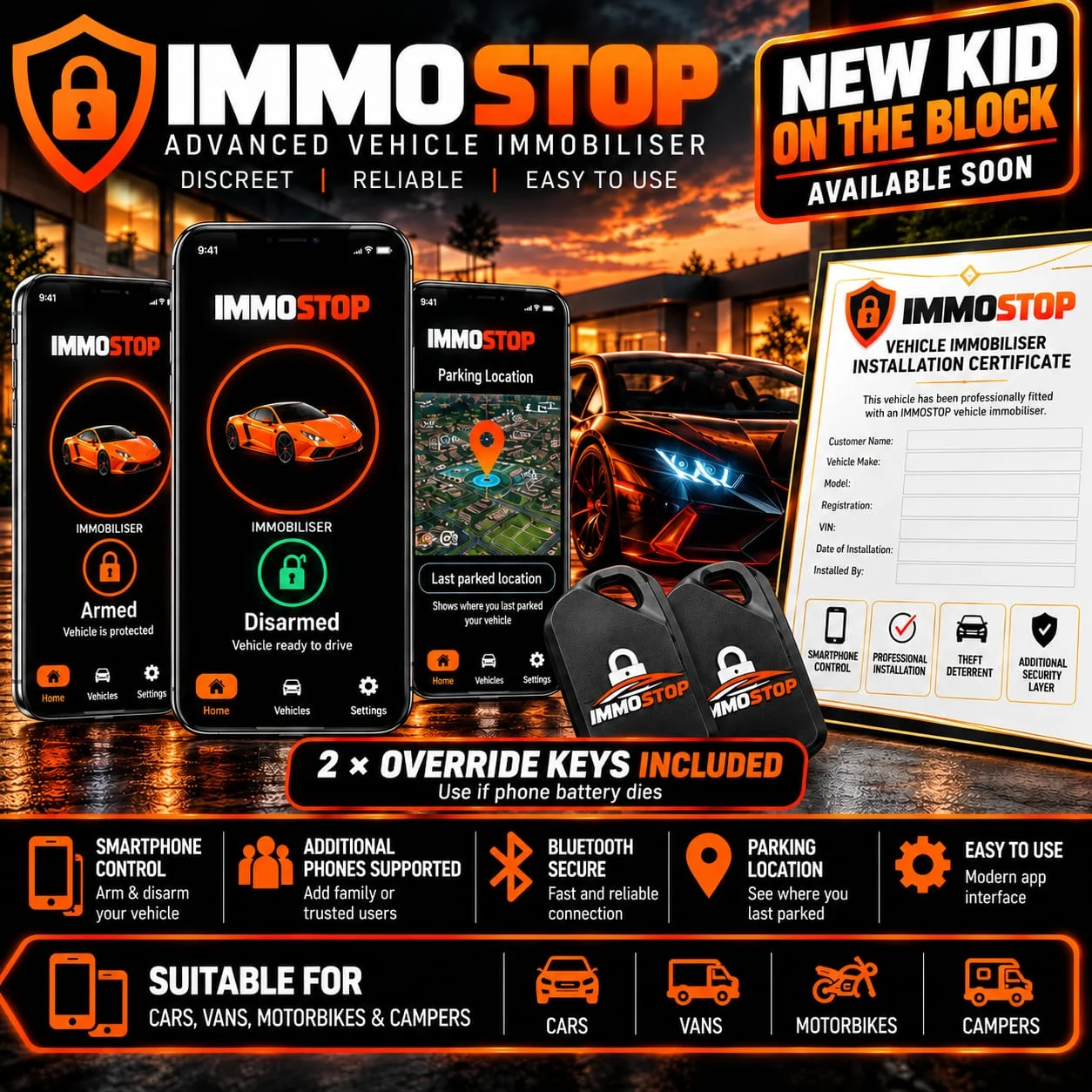
An aftermarket immobiliser that needs a PIN or a separate tag is designed to stop a car being driven away even when the key signal has been relayed or cloned. A tracker doesn’t prevent theft, but it gives police a location to work with. Insurers sometimes ask for a specific Thatcham Research category on higher-value vehicles, so check with yours before buying. A dash cam with parking mode records activity around the car, provided it is wired to run while parked.
Fitting matters as much as the product. A tracker hidden where thieves expect to look, or a dash cam wired to a permanent feed with no low-voltage cut-off, can let you down exactly when it is needed. Cold weather is already hard on batteries, and short winter journeys give them little chance to recover.
Park close to the house and under light where possible. A motion-sensor light over the drive helps, and South Yorkshire Police has said offenders sometimes leave a property after spotting a doorbell camera.
The legal points here reflect UK rules as they stood in October 2026. Governments can change regulations at any time, and the Highway Code is updated from time to time. Insurance terms differ between policies. Treat this article as general information rather than legal or insurance advice, and check your own policy wording.
Autosecureshop supplies and professionally fits vehicle trackers, immobilisers, alarms and dash cams for UK drivers who want more than the security their car came with from the factory.
Car theft in winter rarely comes down to a single weak point. It builds from dark evenings, a fob left by the front door, an engine left running on a frosty morning and presents sitting on the back seat. Sensible habits close most of those gaps. A professionally fitted immobiliser, tracker or alarm covers the ones habits cannot. With the clocks already back and Christmas on the way, now is a sensible time to review how your vehicle is secured, and Autosecureshop can talk through the options.
Contact us today Call-0121 330 0145 / sales@autosecureshop.co.uk. To read reviews, CLICK HERE.
Yes, in most areas. Longer hours of darkness give thieves cover and make them less likely to be seen. West Midlands Police data for 2022 showed October and November as its two busiest months for vehicle theft, and many forces run dark nights campaigns each autumn.
Once the clocks go back, it is dark when many people get home, so parked cars sit unwatched for hours. Thieves can try doors, relay keyless signals or break into homes for keys with less chance of being seen, while owners are indoors with the curtains drawn.
On a public road, leaving a car unattended with the engine running is an offence under the Construction and Use Regulations, reflected in Highway Code rule 123. That offence doesn’t apply on a private drive, but the car is still easy to steal and an insurer may refuse a claim.
A working pouch blocks the fob signal that relay thieves rely on. Linings wear over time, so test it by putting the key inside and trying the car door. Police forces often suggest pouches approved by Secured by Design, and the spare key needs one too.
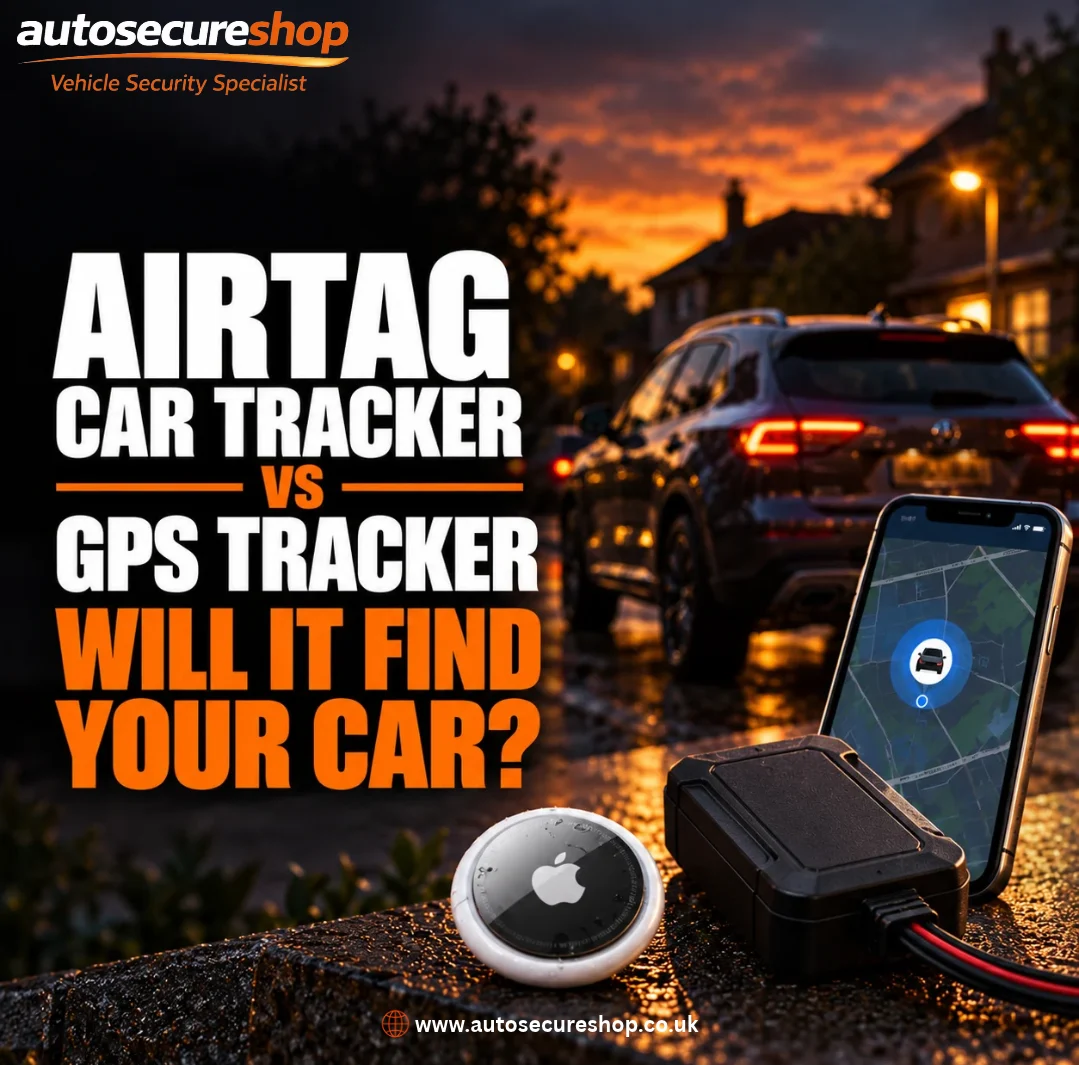
No. A tracker is designed to help locate a car after it has been taken, not to stop the theft itself. Pairing it with an immobiliser, a steering lock and a signal-blocking pouch makes the car harder to take. Check whether your insurer requires a Thatcham category.

£799.00 £699.00

£648.00
We use essential cookies to keep our website working properly. With your permission, we also use optional cookies to understand how visitors use our website and improve your experience.
You can accept or reject optional cookies at any time. For more information, please read our Privacy Policy. Privacy Policy