

CAN bus theft is a way of stealing a car by plugging a device into its internal data network and sending forged messages that tell the car a genuine key is present. The doors unlock, the factory immobiliser stands down and the engine starts, while the real key sits on your kitchen worktop. Thieves usually get at the network through the wiring behind a headlight, which is why some owners find a bumper corner pulled loose a day or two before the car disappears.
The fix is a layer of security the thief’s device can’t talk its way past. In practice, that means an aftermarket CAN bus immobiliser that needs a PIN before the engine will run, backed by a tracker that works independently of the car’s own electronics.
CAN stands for Controller Area Network. It’s the wiring that lets a modern car’s electronic control units (ECUs) talk to each other: engine management, door locks, lights, the keyless entry receiver and plenty more. The standard is more than 30 years old and was designed to be fast and dependable. Security wasn’t part of the brief. On most cars on UK roads, an ECU will believe a message simply because it arrived on the bus.
CAN injection exploits that trust. The thief splices a small box into a CAN wire, and the box repeatedly broadcasts a fake “key validated” message. Engine management accepts it and switches off the immobiliser. A second forged message tells the door module to unlock. Nothing gets smashed, and the car behaves as if its owner had walked up with the fob.
The device needs a CAN wire it can reach from outside the car, and on many models the headlight connector is the easiest one to get at. Pulling back a front bumper corner or wheel arch liner exposes it quickly. That’s where the term headlight wiring car theft comes from, although any exposed CAN wire would do. The headlight is just the quickest route on a lot of cars.
In 2022, automotive security researcher Ian Tabor had his Toyota RAV4 stolen from outside his home near London. Twice in three months he had found the front bumper pulled away and the headlight unplugged, and it looked like pointless vandalism. Then the car was gone. A neighbour’s Land Cruiser went shortly afterwards.
The car’s telematics app had logged a burst of fault codes around the time of the theft, many showing lost communication across the CAN network. Tabor tracked down the tool online, sold as an “emergency start” device and hidden inside a Bluetooth speaker case. Working with Dr Ken Tindell, who helped develop Volvo’s first CAN-based platform, he took it apart. Tindell put the cost of the electronics inside at around $10. The sellers wanted thousands.
Tindell was clear that this isn’t a Toyota problem. Similar tools were advertised for a long list of makes, and any car that trusts unauthenticated CAN messages is exposed in principle.
Keyless cars and higher-value SUVs have been the main targets, largely because organised gangs steal to order, and many vehicles end up shipped abroad or broken for parts. The Metropolitan Police estimates that electronic devices are used in around 60% of vehicle theft in London, a figure that includes thefts from vehicles and attempts.
Where you park counts as well. A car left nose-out on a driveway or kerb gives a thief easy access to its front corners. One parked nose-in against a wall or garage door makes the job far harder.
No single product makes a car impossible to steal. What you can do is make yours slow and awkward enough that thieves move on to an easier one.
A CAN bus immobiliser sits on the same network the thieves attack and stops the engine starting until you enter a PIN. Ghost immobilisers are the best-known example in the UK. The PIN is a sequence of presses on the car’s existing buttons, such as steering wheel controls or window switches, and on Ghost systems it can be up to 20 presses long. There’s no fob to clone and no LED giving away where it’s fitted. A forged “key validated” message doesn’t satisfy it, because the immobiliser is waiting for a code the injector doesn’t have.
How it’s fitted matters as much as what’s fitted. The installer has to confirm compatibility with your exact model and hide the unit somewhere it can’t be found and pulled in a few minutes. Service mode then lets a garage or valet drive the car without you handing over the code.
An immobiliser stops the car being driven away. It won’t stop a gang winching it onto a flatbed. GPS trackers cover that gap. Thatcham Research has long recommended certified tracking that operates independently of the car’s ECU, so the tracker doesn’t depend on the network the thief has just taken over. A Thatcham S7 tracker gives you monitored stolen vehicle tracking, while S5 adds driver recognition tags that trigger an alert if the car moves without your tag present.
There’s a legal angle here too. Under the Crime and Policing Act 2026, police gained a power, in force since 29 June 2026, to enter premises without a warrant to search for stolen goods located through electronic tracking.
A visible steering wheel lock still makes thieves think twice, because removing one takes time and makes noise. A dash cam with a parking mode adds another layer, giving you a better chance of recording anyone working on the front of your car overnight.
Tindell’s view is that manufacturers can fix CAN injection in software, ultimately by authenticating key messages so a forged one gets rejected. Ask your dealer whether a security update has been released for your model. If the answer is no, that’s when aftermarket protection earns its keep.
The Crime and Policing Act 2026 received Royal Assent on 29 April 2026. Section 149 creates offences of possessing, importing, making, adapting or supplying an electronic device where there’s reasonable suspicion it will be used to steal a vehicle or something from inside one. The maximum penalty on indictment is five years in prison. Thatcham Research lists CAN bus injection devices among the tools the new law targets.
At the time of writing, legislation.gov.uk shows section 149 as not yet in force, as it still needs commencement regulations. This information is based on current data, and the government can change the rules or the timetable at any time, so treat it as general guidance rather than legal advice.
The offence should help police take these tools off the street before they’re used. It does nothing for a car parked outside tonight in front of someone who already owns one. For a keyless car that lives on a driveway or the street, a professionally fitted CAN bus immobiliser paired with an independent tracker is the combination to look at first.
Loose bumper clips on a front corner, a wheel arch liner pulled back, or a headlight that suddenly triggers a warning on the dashboard are all worth taking seriously. Thieves sometimes start an attempt, get disturbed and return for the car on another night.
If you spot any of this, photograph the damage, report it to the police on 101 or online, and have the wiring checked rather than writing it off as vandalism. Moving the car somewhere less exposed while you sort out extra security is sensible.
When an injector takes over the CAN network, other control units lose contact and record diagnostic trouble codes. That trail of codes gave the stolen RAV4 investigation its first real clue.
If your car has a manufacturer app that reports faults, check it after a suspected attempt, or ask a garage to read the codes. A cluster of communication errors from the same night is useful evidence for both the police and your insurer.
A PIN-based immobiliser is only as secure as the code. Enter it out of sight of passers-by, and avoid sequences that are easy to follow from the pavement, such as a short run of presses on a single button.
Change the code if you think someone has watched you enter it. When the car goes in for servicing or bodywork, use service mode rather than telling anyone the sequence.
Ask whether the immobiliser or tracker is compatible with your exact model and year, and whether your insurer specifies a particular Thatcham category for your car. On some higher-value vehicles, having a tracker fitted is a condition of cover.
For trackers, find out whether a monitoring subscription is needed and what it includes. Keep the installation certificate somewhere safe, because insurers may ask to see it.
Contact us today [Call-0121 330 0145 / sales@autosecureshop.co.uk]. To read reviews, CLICK HERE.
CAN bus theft is when a thief wires a device into a car’s internal data network, usually through the headlight wiring, and sends fake messages saying a valid key is present. The car unlocks and starts without the real key, often with very little visible damage.
No. A Faraday pouch blocks the radio signal from your key, which helps against relay attacks. CAN injection doesn’t involve the key at all, because the thief’s device talks straight to the car’s wiring. You need protection on the car itself, such as a CAN bus immobiliser.
No security device is unbeatable, but a PIN-based CAN bus immobiliser stops forged key messages from starting the engine. A determined gang could still lift the car onto a lorry, which is why pairing the immobiliser with an independent GPS tracker makes sense.
The Crime and Policing Act 2026 creates an offence of possessing electronic devices for vehicle theft, with up to five years in prison. At the time of writing, that section is awaiting commencement. Rules can change, so check legislation.gov.uk for the current position.
It depends on your insurer. Some ask for a Thatcham-certified tracker on high-value or high-risk cars, and fitting one can make cover easier to get. A tracker doesn’t guarantee a lower premium, so check with your insurer before buying and keep the fitting certificate.
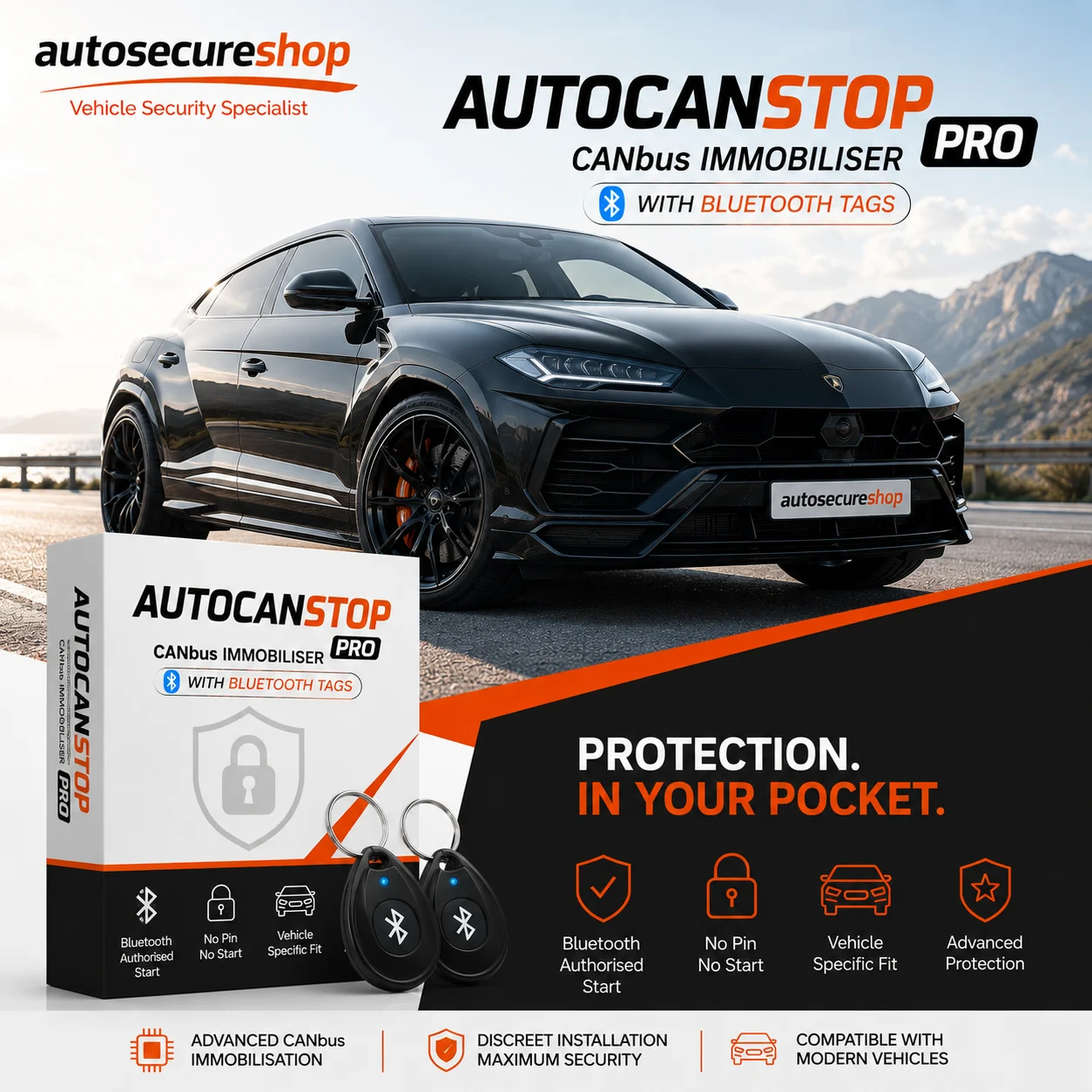
£549.00
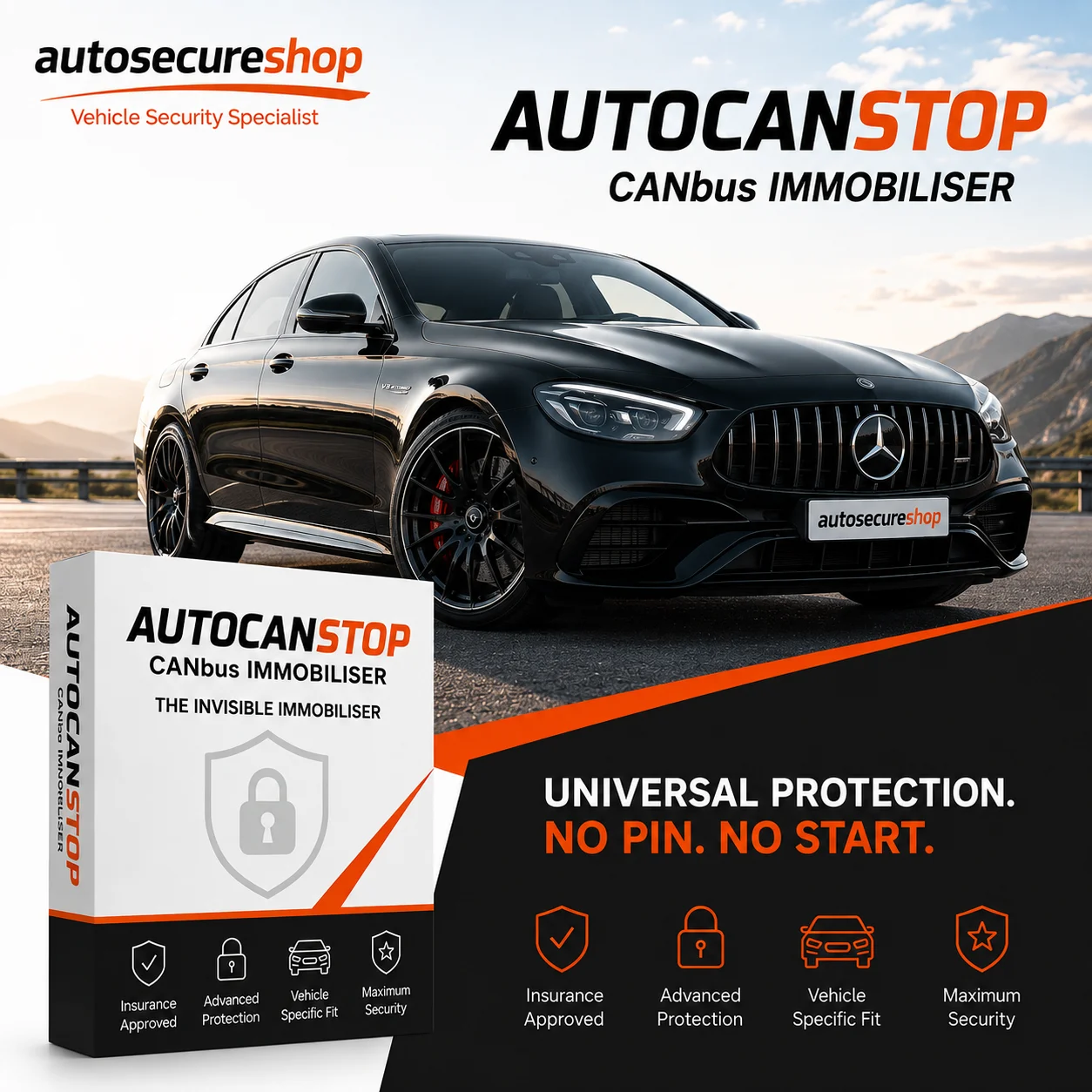
Vehicle Immobilisers
£499.00