If you want the short answer: the best Range Rover security in 2026 is a set of layers rather than one gadget. Get the factory software updates done, look after the key properly, fit an aftermarket immobiliser that stops the engine starting without your code or tag, and add a Thatcham-certified tracker so the car can be found if someone gets it moving anyway. Visible deterrents and a dash cam go on top.
The order matters. A tracker helps you get a car back. An immobiliser is what stops it leaving your drive in the first place, and on a Range Rover, an owner would want both.
Less than it was, but yes. DVLA figures for 2025, analysed by What Car?, show 54,830 vehicles reported stolen across the UK, 11% fewer than the year before. Range Rover Sport thefts fell by roughly a fifth. The Range Rover Evoque still made the top ten, in ninth place, and it was the only Land Rover product on the list.
2024 was worse, with 1,087 Evoques and 867 Range Rover Sports stolen. Things are moving the right way, largely because the manufacturer got serious, but a falling national figure is cold comfort if yours is the one that disappears.
Thieves want Range Rovers for the same reasons people buy them. They hold their value, the parts sell well and there is demand for them abroad. Electronics now do most of the work: the Metropolitan Police estimates that electronic devices are used in around 60% of vehicle thefts in London.
Three methods come up again and again.
The first is the relay attack. One device picks up the signal from a keyless fob inside your house, a second passes it to the car, and the car behaves as if the key were standing next to it.
The second is key programming. Once inside, thieves plug equipment into the diagnostic (OBD) port and programme a new key. JLR’s theft reduction team has described this, often called a BCM hack, as the route criminals turned to when relay attacks got harder.
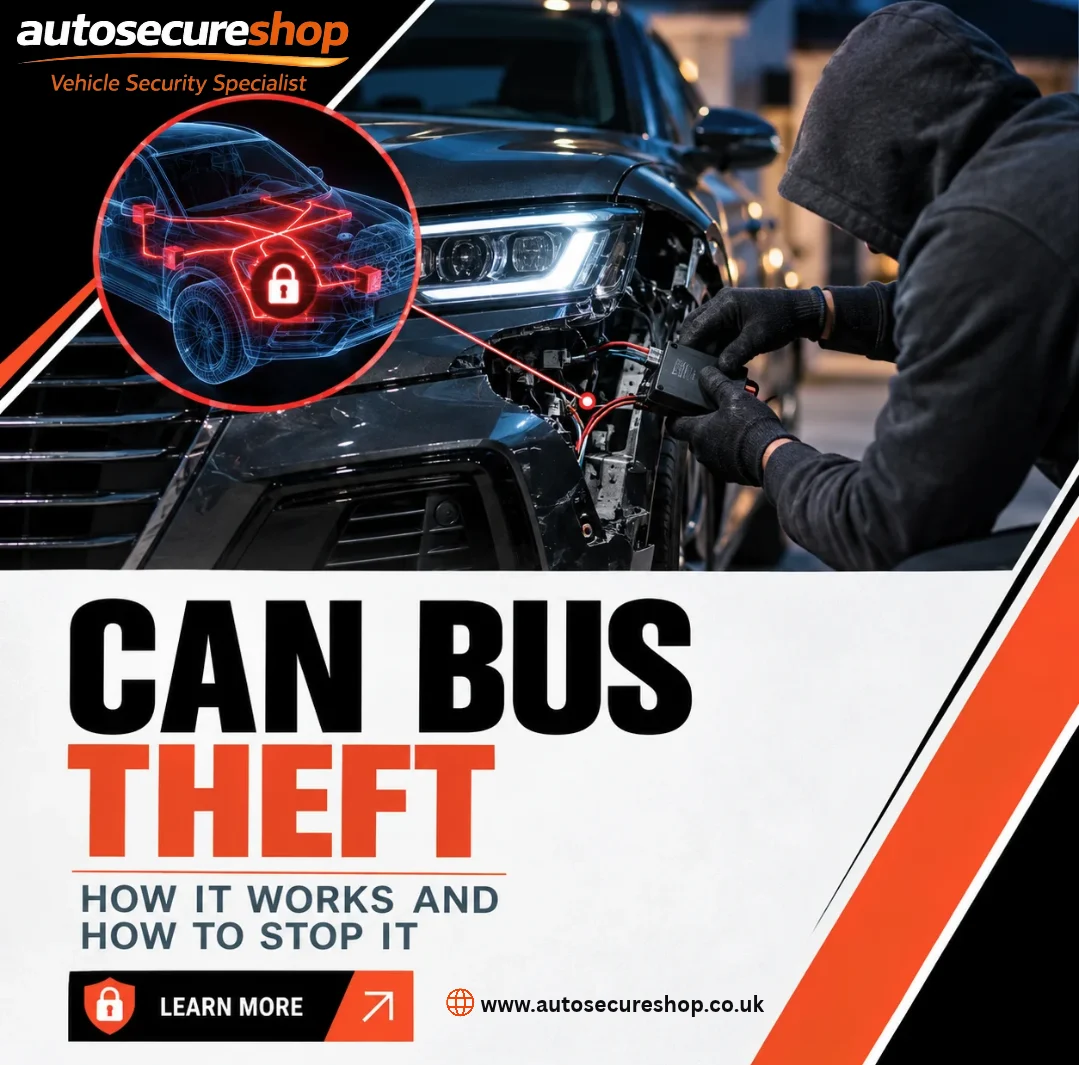
The third is CAN injection. The CAN bus is the network that carries messages between a car’s control units. Thieves reach that wiring from outside, often behind a headlight or a wheel arch liner, and send messages telling the car a valid key is present. Automotive security researcher Ken Tindell documented the method in 2023, and it isn’t limited to one manufacturer.
Credit where it’s due. In 2018 JLR introduced ultra-wideband (UWB) keys, which measure how far away the key really is, and in June 2024 the company said it had no recorded UK relay thefts of its vehicles fitted with UWB.
It has also been rolling out free software updates for vehicles built from 2018 onwards, aimed at the Body Control Module weakness, with updates for cars back to 2016 in the pipeline. More than 160,000 vehicles had received the software by June 2024. JLR said earlier updates had cut thefts of 2018 to 2022 Range Rover and Range Rover Sport models by more than 40%, and it posted Faraday pouches to owners of older cars without UWB.
Land Rover also sells its own tracking subscriptions, with one tier certified to Thatcham S7 and a higher one to S5.
All of that is worth having. The one reservation is simple. Factory security is the security thieves study hardest, because every car of that model has the same system in the same place. An aftermarket layer that isn’t standard gives them something they haven’t practised on.
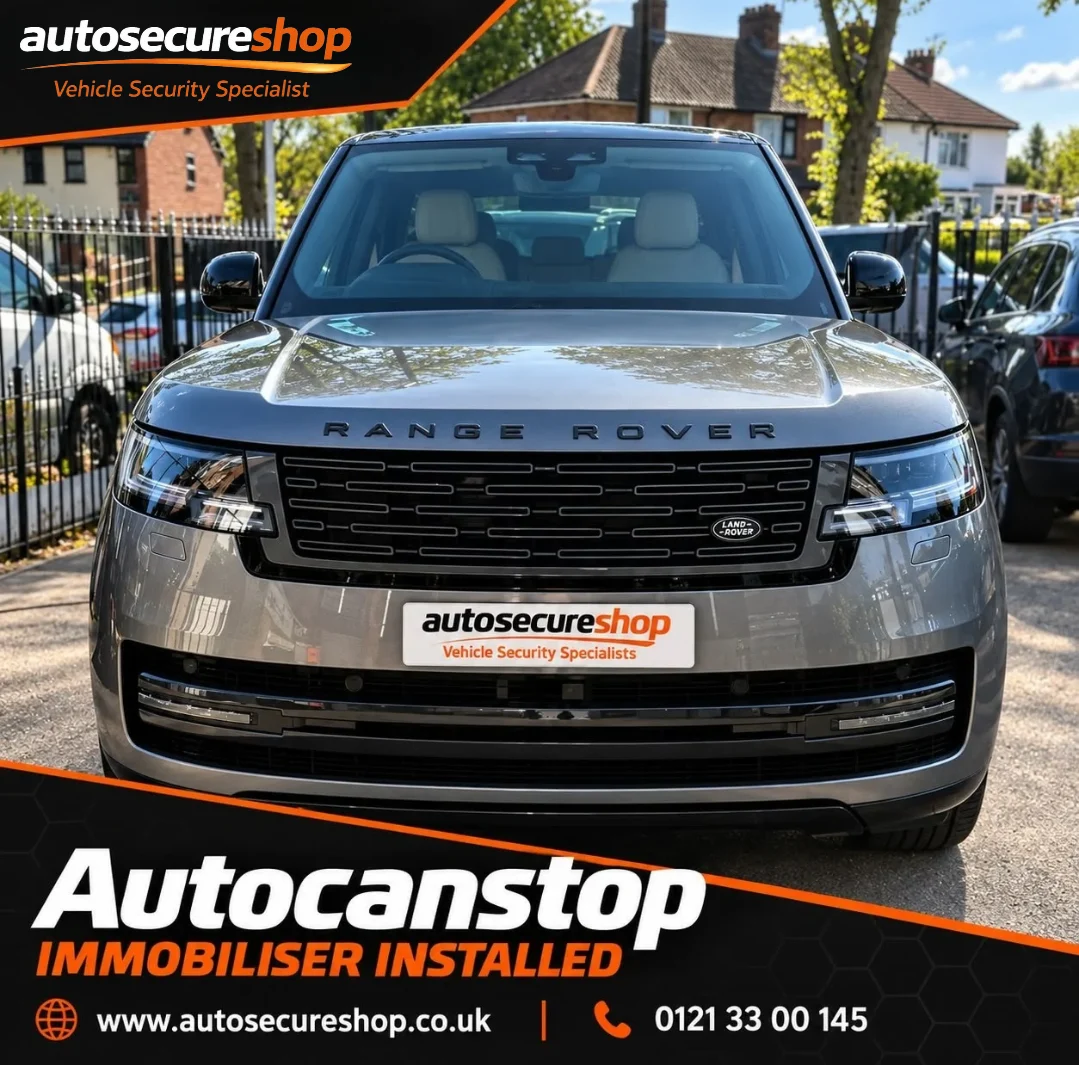
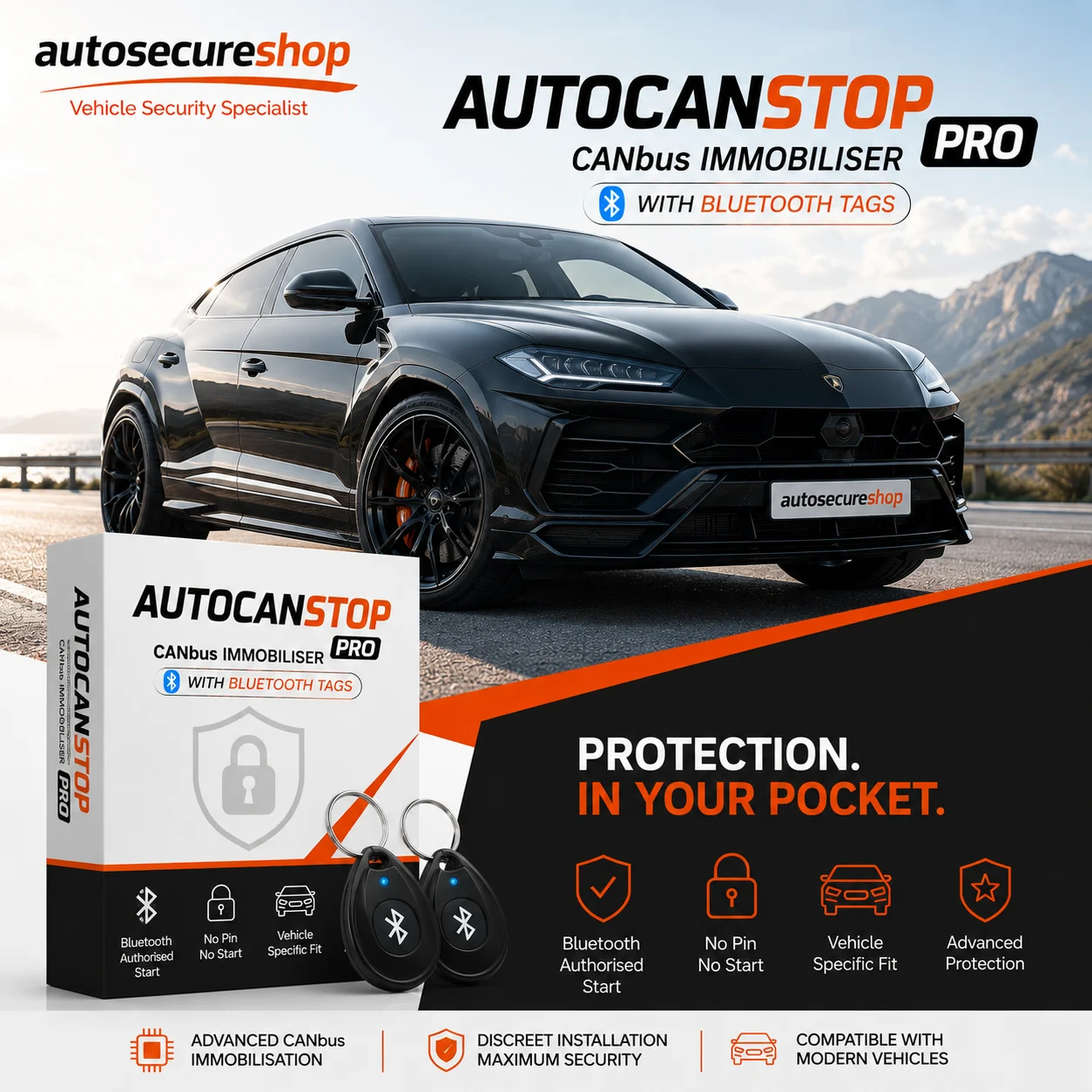
An aftermarket CAN bus immobiliser is a small module wired into the car’s network that prevents the engine starting until you confirm you’re the driver. Depending on the system, you do that by entering a PIN sequence on the car’s existing buttons, such as the steering wheel or window switches, by carrying a separate tag, or through a phone app. Owners looking for a ghost immobiliser for Range Rover protection usually mean this type of device: one with no key fob of its own, nothing visible on the dash and nothing obvious for a thief to find.
This is the piece that answers all three theft methods above. A relayed signal, a freshly programmed key and an injected CAN message can each convince the car that the right key is present. None of them knows your code, so if the immobiliser hasn’t been disarmed, the car shouldn’t drive away.
From the fitting side, three things decide whether it works in practice:
A tracker doesn’t prevent a theft. It improves the odds of getting the car back and, on many policies, it’s a condition of cover.
Thatcham certifies two tracker categories. Category S5 covers vehicle tracking systems with driver recognition, usually a tag or an app, and 24/7 monitoring. If the car moves without the authorised driver, the monitoring centre is alerted without waiting for you to notice the car has gone. Category S7 covers asset location systems. These can locate the vehicle but don’t identify the driver, so you normally have to report the theft yourself before tracking begins.
On a current Range Rover or Range Rover Sport, S5 is the sensible starting point. Brokers report that some insurers now make an S5 tracker, often alongside an immobiliser, a condition of cover for these cars. Your own policy wording is what counts, so read it before buying anything and keep the installation certificate somewhere safe. Trackers also carry an ongoing subscription, and if it lapses you may no longer meet the policy condition.
The Sport has been the headline target for years, which is why its theft figures dropped so sharply once the software updates arrived. If yours was built from 2018 onwards, confirm with a Land Rover retailer that the update has been applied. Then add an immobiliser and an S5 tracker. On a car worth this much, owners shouldn’t settle for less.
The Evoque sits lower in the price range, which changes the sums without changing the risk. On an older Evoque, particularly one built before the 2018 key change, careful key storage and an immobiliser are probably the best value for money. Whether you also need an S5 tracker depends on what your insurer asks for and what the car is worth.
The Crime and Policing Act 2026 received Royal Assent on 29 April 2026. It creates offences of possessing, importing, making or supplying electronic devices used in vehicle theft, including relay tools, signal jammers, key emulators and CAN injection devices. Anyone caught with one has to show a legitimate reason for having it, and police can seize devices without linking them to a completed theft.
That should make life harder for organised gangs. It won’t make your car any harder to steal tonight. This summary is based on current information: different parts of the Act can come into force on different dates, and the UK government can change the rules at any time.
Fitting a tracker or immobiliser isn’t finished until your insurer knows about it. Give them the product details and the installation certificate, and ask whether it meets any security condition on your policy or affects your premium. If the policy names a specific category, such as Thatcham S5, check the device and the installer’s paperwork match it.
If you change the car, change the policy details too. Security that was never declared, or a condition that quietly stopped being met, is the sort of thing that surfaces at claim time.
CAN injection usually starts at the front corner of the car, behind a headlight or inside a wheel arch. Parking nose-first against a wall, garage door or fence makes that area harder to reach without being seen.
On a driveway, a lockable bollard or a gate slows down any exit. Motion-activated lighting helps too. None of it is high-tech, but thieves working at speed tend to choose the car that needs the least time.
Stolen Range Rovers are sometimes given the identity of a legitimate car and sold on, a practice known as ringing. Before paying, check that the VIN on the car matches the V5C logbook, and look up the free MOT history on GOV.UK to see whether the mileage and test record make sense.
Ask the seller whether the software security updates have been done, and whether any aftermarket tracker or immobiliser comes with its codes, tags and paperwork. A second-hand system you can’t operate is no use to you.
While electronic security is highly effective, physical deterrents still play an important role in Classic Car Security UK. Devices such as steering wheel locks, wheel clamps, pedal locks, and secure garage anchors create an additional layer of protection. Visible security measures often discourage opportunistic thieves and increase the time and effort required to steal a vehicle, making your classic car a less attractive target.
A lot of theft prevention comes down to making your car look like more trouble than the one next door.

Anyone securing a Range Rover this month should work in this order:
Installation is where cheap setups fall down. A tracker hidden in the same spot as every other one, or an immobiliser wired so it can be bypassed at a single connector, gives you the paperwork without the protection. Autosecureshop supplies and professionally fits trackers, immobilisers, alarms and dash cams, so the layers can be planned and fitted together rather than bolted on one at a time.
Contact us today [Call-0121 330 0145 / sales@autosecureshop.co.uk]. To read reviews, CLICK HERE.
The strongest set-up is layered: the manufacturer’s software updates, careful key storage, a professionally fitted CAN bus immobiliser and a Thatcham S5 tracker. The immobiliser stops the car being driven away, and the tracker gives you the best chance of recovery if it is taken.
It depends on your insurer and the car’s value. Some insurers make a Thatcham S5 tracker, sometimes with an immobiliser, a condition of cover for Range Rover models. Always check your own policy wording before buying, and keep the installation certificate somewhere you can find it.
A CAN bus immobiliser blocks engine starting until you enter a PIN or carry an authorised tag. Relay attacks, programmed keys and CAN injection all mimic a valid key, but none of them knows your code, so a properly fitted system should stop the car being driven away.
Yes, if your key lacks ultra-wideband technology, which JLR introduced in 2018. A pouch blocks the signal a relay device needs. Newer UWB keys resist relay attacks, though keeping any key out of sight and well away from the front door is still a sensible habit.
Under the Crime and Policing Act 2026, possessing or supplying electronic devices used in vehicle theft is an offence unless you can show a legitimate reason. Parts of the Act come into force at different times, and the UK government can change these rules at any time.
£549.00